


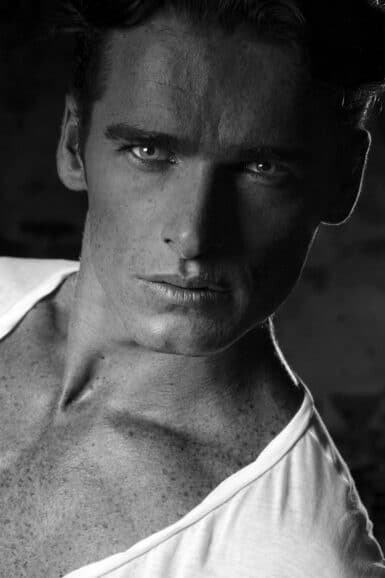
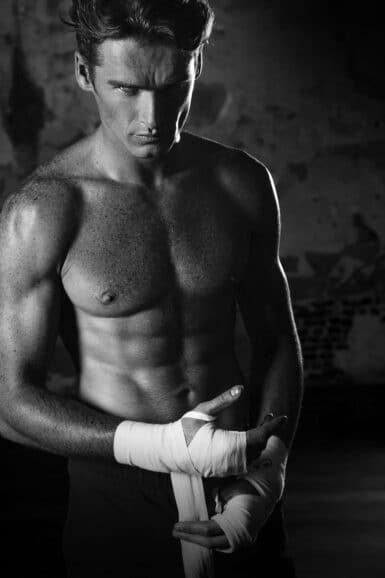
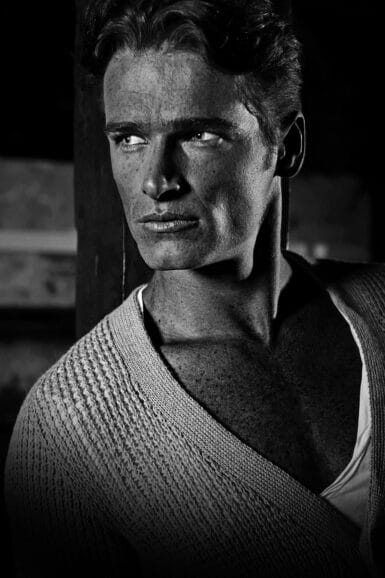
Looking through my archives, I rediscovered this session from September 2011 with male model Gaël Laudet. These black and white male portraits, photographed in a Paris studio, retain their intensity: sculpted light, close framing and a gaze moving from restraint to determination.
A male portrait between strength and sensitivity
Portraiture begins with an encounter. Before thinking about a perfect pose, I look for presence, a fitting tension and something personal that can emerge in the image. With Gaël, the work developed around contrasts: physical strength and vulnerability in the gaze, precise posture and freedom of movement, light and deep blacks.
This duality gives the series its character. Some portraits are frontal and direct. Others allow part of the face into shadow or use backlighting to separate the silhouette. The setting stays discreet, concentrating attention on expression, body lines and skin texture.
A successful portrait creates space for a person to reveal an attitude, an energy and sometimes an unexpected aspect of themselves.
Why choose black and white in a studio?
Black and white simplifies an image while retaining its richness. Removing colour makes volumes, light direction and nuances of expression more visible. In this series, shadows shape Gaël’s face, emphasise its structure and add depth.
This choice also connects different attitudes within one visual world. Clothing, a scarf, a T-shirt or a bare torso become graphic elements. The resulting editorial coherence is useful for a modelling portfolio, casting profile or personal series.
Gaël Laudet portrait gallery
The selection below shows different ways to create a male studio portrait in Paris: profile, three-quarter, facing the camera, close framing or a wider shot. Each variation changes the relationship with the model and the feeling conveyed to the viewer.


From model direction to final selection
Directing a model means proposing a starting point, observing what works, then refining a movement, face angle or hand position. This progression produces variety while preserving a shared identity.
Final selection is another essential stage. In a portfolio series, each photograph should add something different: an expression, framing, silhouette or energy. Similar images compete with one another. A focused selection tells the model’s story better and makes the portfolio clearer for an agency or casting director.
12 professional photographic poses for a male model
This short video brings together twelve photographs selected after the shoot. It shows how one session can move from close portraiture to more fashion or fitness-oriented attitudes while retaining the coherence of black and white.
Watch the video on YouTube or explore other sessions on Jean Christophe Lagarde’s channel.
Preparing for a male studio portrait session
Before a session, define the intended use of the images: modelling portfolio, casting, professional communications or a personal project. A few simple, complementary outfits offer more possibilities than an overloaded wardrobe. Preparation provides a starting point while leaving space for spontaneity.
Explore this approach further in my guide to studio portrait photography in Paris, which presents my portrait work and the experience offered more generally.
Would you like a studio portrait session?
Tell me about your portfolio, professional project or the image you would like to create.
Frequently asked questions about male portraiture
Why create a male portrait in black and white?
Black and white emphasises gaze, volume and light. It also helps create a coherent, timeless series.
How should I prepare for a studio portrait session?
First define how you will use the photographs and bring a few complementary outfits. The photographer can then guide attitudes, expressions and the pace of the session.
Can these portraits be used for a portfolio or casting?
Yes. Varied framing and expressions can contribute to a modelling portfolio, casting profile or professional communications.
Where are the portraits taken?
This series with Gaël Laudet was photographed in a Paris studio by Jean Christophe Lagarde.


